Hiroshima On My Mind


Hiroshima Damage

Photo by Sergeant John M. Poland Jr.

I’ve never been to Japan, never set foot there, but Dad went. Thus Japan has touched me in ways obvious and ways hard to explain. The obvious is easy. I drive a Honda HRV. I take digital photographs with a Canon T5i Rebel. Japan Victor Company built my flatscreen. Sony manufactured my home sound system. My Vortex binoculars came from Japan. I talk on Panasonic telephones. I own so many Japanese products, I might as well move into a rice-paper house ringed by bamboo, take off my shoes, put on a kimono, grab some chopsticks, and live off Japan’s four major food groups: fish and rice, rice and fish, fish and fish, and rice and rice.

The rest is less straightforward and weightier. My Japanese musings took over me the day I heard about Chrysler’s bankruptcy. For me, Chrysler sits at the intersection of two key memories, memories of a boyhood discovery and a 1956 Plymouth, turquoise and white, with delicate fins. It’s the first car I remember Dad buying, not that long after World War II. Dad pretty much bought Chrysler cars all his life.

We who buy Japanese cars didn’t help Chrysler’s cause, but don’t blame us. Japanese cars last. They’ve come to embody the phoenix-like rise of a country leveled by war, demolished by us in a way like no other, but brought back by us as well. From a nuclear funeral pyre, Japan rose to give us dependable cars, radios, TVs, telephones, and more. Japan, the vanquished enemy, conquered as no country has ever been conquered, came roaring back.

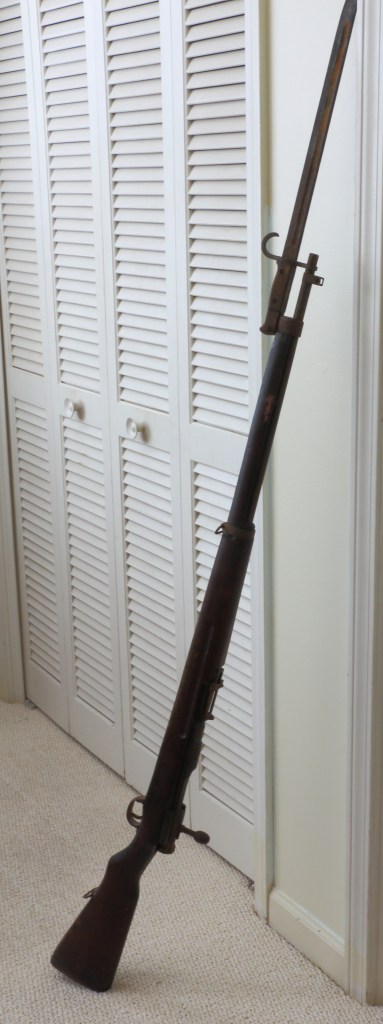
The other memory goes way back as well. Rambling through closets as a boy I discovered a Japanese rifle with bayonet and silk flags, relics of Dad’s time in Japan. Unfolding the flags, a rising sun with rays burst off the alabaster silk as if afire. Japan—Land of the Rising Sun. The Imperial Japanese Navy flew those flags as did the Japanese Army. In battle, those flags were among the last sights many warriors on both sides saw. To me, they were playthings. I made parachutes of those silk flags, tying a rock to them, hurling them up, and watching them drift lazily back to Georgia soil.
Japanese Rifle

The rifle remains but somewhere in my boyhood those flags disappeared. What a loss. I’d love to have one framed with an inscription. “Liberated and brought to the United States by Sergeant John M. Poland Jr.” With Japan’s surrender August 14, 1945, Allied Occupation Forces banned the Rising Sun flags. Maybe that’s how Dad came by them. Confiscated.

The Story Begins … Dad journeyed to Japan on a troop carrier in Operation Downfall, the Allied plan to invade Japan. Along the way the atom bomb brought Japan to its knees, and some 200,000 servicemen, would-be invaders, occupied Japan instead.

Hiroshima is often on my mind. Dad served in U.S. Army Ordnance and spent time in Hiroshima not long after the Enola Gay dropped “Little Boy.”

Hirosima1

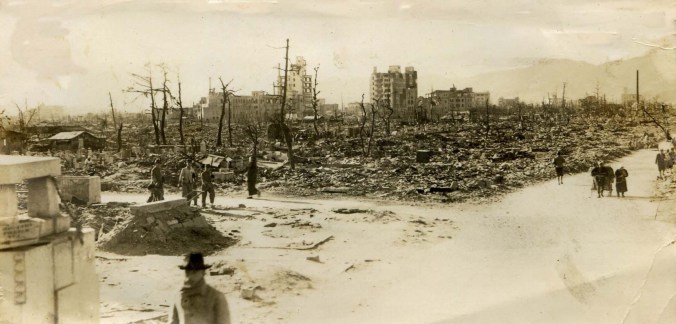
Hiroshima Atomic Bomb photo taken 1-22-46, not 1945   Photo by Sergeant John M. Poland Jr.

There in the land of geishas and samurai, he might as well have been walking on the surface of the sun. He was at most, 19 or 20. The things he must have seen as he tread Hiroshima’s toxic soil. There was no way he could avoid horrors. Skinless people. Men with stripes burnt onto their skin. They were wearing striped shirts when the brilliant flash hit them, the nuclear burst that stenciled dress patterns onto women’s bodies. Dad never talked about things like that, but they happened. That and worse.

He returned to Georgia with evidence of his Hiroshima days: the flags and horrific photos. The photos, taken from a low, wide perspective, reveal block after block of charred rubble with I-beams drooping like melted candles. The next time you drive past a field of corn chopped close to the ground, imagine it burnt too. That’s what Hiroshima looked like, a charred, leveled cornfield.

At ground zero the heat reached millions of degrees. Some victims left shadows etched into rock … vaporized … perhaps that’s why censors placed rectangles black as midnight on some of Dad’s photos. No need to generate sympathy for the enemy. By the end of 1945, radiation and injuries, burns in many cases, raised the total to 140,000 dead.

Even as a kid, those photos told me Hell itself had been unleashed on Hiroshima. It didn’t come as a surprise. Robert Oppenheimer, father of the atomic bomb, held onto a post to steady himself as the seconds for the initial test ticked down … “3, 2, 1!” A brilliant burst of light and a deep growling roar. Apocalyptic words escaped Oppenheimer’s lips: “I am become Death, the destroyer of worlds” … words from the “Song of God,” a Sanskrit Hindu scripture.

Now and then in pensive moods, waiting for a traffic light to change, I think about the Hondas, Nissans, and Toyotas around me. These cars plunged a dagger into Chrysler’s heart, nearly killing off my Dad’s favored brand. I know that many of those cars are now made in the United States. I know, too, that many are not. I wonder about the Japanese autoworkers who built them and what life was like for their parents. Surely some had okasans (moms) and otousans (dads) who experienced atomic warfare like no others.

The bombs saved lives in the long run, they say, and I believe that. Still, the hidden choice facing some U.S. soldiers was to die in an invasion or die down the road from radiation’s long-term effects. They had no choice, really, and the long run continues to lose value as it reaches out and kills people still.

A flash of light, fire, and wind blast, and fire again, a towering mushroom cloud, black rain, people with their arm skin and fingernails sliding onto the ground, silhouettes of people burned into granite. How did the survivors pick up and carry on? After loved ones simply vanished without a trace. How?

For the U.S. servicemen, it must have been Hell and Heaven intertwined. The end of war at last, but a headful of horrors to go home with. Burdened U.S. servicemen performed their duty, crossed the Pacific again, and returned home to begin life anew. Memories of Hiroshima had to haunt them. How could it not. Appreciating life like few of us ever will, these veterans, these Atomic Veterans, came home to do good. Many started families. Many bought American cars. Some bought two-tone Plymouths.

Some returned with keepsakes of where they had been, flags, photographs, and things they didn’t talk about. Touched by Hiroshima, some returned with things they didn’t know they had or would have, like throat cancer.

It took “Little Boy” 57 seconds to fall over Hiroshima, and for some American soldiers like my father, the damage took 57 years to reveal itself. Damage that made dying American GIs victims, too, of World War II … the long run turned upside down.

I don’t recall dad saying he hated the Japanese. Not once. But he never had much to say about his days in Hiroshima. The years rolled by … During the ’70s, he sold Hodaka motorcycles and dirt bikes. He always owned Chryslers and Plymouths, but near the end of his life he bought a Mazda pickup, a company that got its start in Hiroshima. Dad had come full circle.

Like Going To Africa

Strange Plant 4

A “High Pond”


DISPATCH #12: June 24, Janet Harrison High Pond Heritage Preserve

The Janet Harrison High Pond Heritage Preserve sits off the intersection of Highway 39 and Carolina Bay Trail. Driving in at 6:45 a.m., though I’m near Monetta—peach country—this place resurrects memories of films, books, and National Geographic features. “Like going to Africa,” I think. Blackbirds perch in every pine near the preserve, a welcoming committee of sorts. What clamor.

Arriving at the bay’s south side along Highway S2-S1223, the Carolina Bay Trail, we immediately spot tall stalks of a plant best described as alien. They tower over surrounding vegetation and the strange stalks look a bit like cacti the pale color of aloe. Each one features a yellow corn-cob-like top heavy with what appears to be seeds. Some stand seven feet tall. (Later I learn that they are an exotic that did, indeed, come from Africa.)

When you go to a Carolina bay, or on this case a “high pond,” your senses go on high alert. So much to see. So much to hear. A bobwhite whistles but though I never hear bobwhites anymore, certainly not like I did as a boy growing up in rural Georgia, I’m not surprised. Almost every bay I’ve been to resounds with the bobwhite’s sharp, lilting whistle. In fact, over the last 20 years, the only quail I’ve heard have been in Carolina bays. Tells me something about the loss of habitat. The wealth of bird life in Carolina bays astounds. You see and hear so many birds in the bays. No backyard habitat rich with sunflower seed-filled feeders can compare.

Some experts describe this Heritage Preserve not as a Carolina bay but as a “high pond.” By that, they mean it holds water yet sits above the water table as true bays do. Some believe this preserve may well be evolving into a Carolina bay. In other words, the preserve may be a bay in the making. Hard to tell as no one can fully explain how Carolina bays came to be. The dramatic meteorite bombardment theory doesn’t hold water, but bays do. That’s one reason they run rich with flora and fauna.

When I go afield I take a camera, notepads, compass, Bertucci A-5P field watch, Vortex Diamondback 8×42 glasses, snake leggings, and Kershaw knife. Makes me feel prepared. The sun rose at 6:14, and at 7:16 the sun breaks through a low smoky cloud. At 7:21 it hides again. Rainy weather, a surprise, moved in over night. Frogs sing. They’re happy.

“Man, this is like a garden in here,” says Robert.

Many wildflowers grow here. As many rare plants live here as anywhere in South Carolina … harperella, pink tickseed, Florida false loosestrife, slender arrowhead, dwarf burhead, and others. Amid all the vegetation dead trees, snags, attest that something here went wrong for them.

“This place is just weeds to a lot of people,” says Robert.

It’s easy, no doubt, to ignore and undervalue such a place in our era of manicured lawns and orderly flowerbeds. And then there’s that old mindset that “swamps aren’t good for much.” Yeah, just keeping the world healthy.


This place does nothing to dispel the feeling that I’m in Africa. I need a machete. As we’ve come to expect, thick, shrubby undergrowth makes it difficult to get into the interior. Currents of air carry a heavy fragrance, musk-like, best described as the smell of marijuana. It’s akin to what my mom referred to as “swamp smells.”

Afar stand a few homes. One home has a good view of the preserve. I wonder. Do these people realize they live on the edge of Africa?

The birdcalls never let up. Nor do the frogs. It all makes for a pleasant medley. Only an occasional truck or car mar the peace.

8:47. The flow of cars and trucks picks up. Drivers seem intent on “getting there” wherever “there” is. Late for their workday routine, perhaps.

Looking northeast across the bay, the terrain plunges into a crease and then rises. Water stands in the crease. Sunlight reflects off clouds and briefly lights up the water some 200 yards away. The water possesses a mirage-like dimension. It doesn’t exist yet it does. It brings to mind Hemingway’s True At First Light … “In Africa a thing is true at first light and a lie by noon and you have no more respect for it than for the lovely, perfect weed-fringed lake you see across the sun-baked plain. You have walked across that plain in the morning and you know that no such lake is there. But now it is there absolutely true, beautiful and believable.”

The water is there. No denying that nor denying the croaking frogs it sustains.

Trying to gauge the size of this “high pond,” I’d say it takes up the space an SEC stadium requires for immediate parking and tailgating. I love SEC football, Georgia especially, but it’s damn fine that man can’t bring his cement mixers and power tools here. We need wild places … need them more than they need us.

9:16. The low smoky gray clouds persist and that’s fine with Robert. He likes overcast skies for they reflect even light that’s free of contrast.

Several years back, drought let pines invade the edge of the preserve. We’ve seen the effects of drought in a lot of bays. Free of standing water, plant succession takes over and saplings invade places. Thick tangles of blackberries fringe the preserve’s northeast edge. The bushes are heavy with them and they seem as plentiful as stars in the Milky Way. I eat the big shiny blue-black berries and fill a bag with them. Maybe a friend will make a blueberry pie.

As for the late Janet Harrison, well, she worked at the Savannah River Site Ecology Lab. A wild and beautiful place commemorates her memory. Hard to believe such an untamed place exists in the heart of peach country … farming country. Just beyond the preserve’s southwest end, stands an old windmill, vines climbing high. If they haven’t already they will soon reach of its blades. I like these picturesque old windmills. They convince me the people who built them were “greener” by far than we are.

To be June, it’s a cool morning. And though cool it’s a good day to wear Off—pesky gnats form thick clouds that hover just beyond the eyes. The wind picks up and blows away the gnats. It blows, too, and a familiar refrain my way: a chorale of frogs and birds. The frogs sit and croak and bark in the wet interior where the lush sedges grow. The sedges’ bright green stands out and the way they rise and fall beneath the wind renders them into emerald rivers. Robert says a multitude of blue darters fill the interior.

The clouds begin to disperse, torn into shreds by winds aloft. We pack up and prepare to head back to civilization.

It’s easy to focus on the wilderness, beauty, and singularity of a place like this, but what’s important is the role it plays as a conservatory of unusual habitat, an unusual landform, and rare flora and fauna. To stand here and look across the preserve transcends experiencing an Africa-like place. I’m standing on the edge of today gazing into the past, time traveler that I am.

A Country Store Carries On

Coopers Store 2

Cooper’s Country Store


It’s been called the best country store in South Carolina. You can buy Virginia cured hams there, and you can buy gas, diesel, propane, shotgun shells, wrenches, and frying pans. Why you can even buy hog heads for headcheese, red hash, fig jam, hoop cheese, Blenheim’s Ginger Ale, and cheap wine there. As country stores in this part of the South go, it’s famous. Its fame, in fact, earned it a spot in the esteemed Southern magazine, Garden & Gun. So, if you have a hankering to see a genuine survivor, an honest-to-goodness country store, get in your car and drive US 521 to Salters, South Carolina. There sits Cooper’s Country Store on a major backroad to the Grand Stand.

You can’t miss it. The red-and-white two-story store commands the eye. The big Exxon sign on top the living quarters adds its splash of patriotic colors to the scene. So does the Pepsi sign to the right in front of the upstairs porch. The store is classic and just about everything about it delights the senses. Go to the rear and stand near the fine Southhampton hams hanging in a screened-off cage. Inhale an aroma that has been making mouths water for many, many decades.

Everywhere you look, a jumble of sights delights the eyes: cookies, candies, hand-lettered signs, and an amazing table featuring the shiny brass heads of 12-gauge shotgun shells. Fan belts hang on racks. The bacon here makes many a breakfast at the beach a feast. Curiously out of place is a surveillance camera, a sign of the times and not at good one.

Toilet tank repair kits, eyebolts (Good for hanging Pawley’s Island hammocks), and collectible but not for sale old farm implements grace the store. A precursor in a way to Walmart, old country stores like Cooper’s provided just about anything country folk needed.

Cotton farmer, Theron Burrows, built the store in 1937. Known from the start as Burrow’s Service Station, it sold Esso gas. The name changed in 1974 when Burrow’s son-in-law, George Cooper, and Burrows’s daughter, Adalyn, took over the venerable store. Russell Cooper runs the store today.

Like a lot of old country stores that surrendered to time, Cooper’s Country Store is a two-story affair with a home upstairs where the proprietors once lived and occasionally still stay. The French have a beautiful architectural term describing the covered entrance beneath which vehicles drive through: “porte cochere,” a porch where vehicles stop to discharge passengers. Well, you can be sure a lot of vehicles and passengers have passed through here, and so should you.

I should issue a warning to people hell bent to get to the beach. Don’t stop at Cooper’s Country Store. You’ll linger far longer than you intend. God knows you may end up late to the land of traffic congestion and wacky golf. But, for those who want to see what was a common part of their grandparents’ lives, you’ll find the old store at the intersection of 521 and 377, the junction where the past meets the present.

Home Was Where The Heart Was

During a trip to Savannah River Site I toured the ghost town of Ellenton. Ellenton, an apparition, haunts me. An entire town … moved. I examined the unexpected exodus of Ellenton’s residents and two things caught my attention. One involves nature; the other human nature.

Nature first. The afternoon I saw Ellenton brushy undergrowth grew where homes had sat. Where people once slept vines hung from trees. Curbs still looked solid. Not so the cracking sidewalks, which lay beneath grass. The school’s playground looks remarkably unchanged for it has long resisted nature’s efforts to reclaim what is hers. Years of small feet running and jumping, playing ball, Red Rover Red Rover sending folks over, and tag had packed the soil into an impermeable surface. Amazing to me.

Human nature next. As I probed Ellenton’s history I learned that Ellenton’s residents found out just a few days before Thanksgiving that their homes would be no more. Overnight farmers had no land. They had to find farmland right away or lose a year’s income. This shock, this sudden departure from life as usual, would extract a severe price in years to come.

“Of those fifty or older who relocated to New Ellenton, over half died within a decade. Expatriates forbidden to visit their old homes, their will to live withered.”

Over half of those 50 and older who relocated died within ten years. That says a lot about human nature and the differences between the young and the old. The young just pick up and move. Not so the older set. When you’ve got a good many years under your belt, your heart is where home is, where you spent your life or a significant time, where you yearn to be. In Ellenton’s case residents’ heart remained back where they had lived.

And that brings me to small towns. It seems fewer people move in and out of towns compared to cities. Lots of hustle and bustle in cities. Lots of people whose career keeps them on the move. I know a lot of people here in Columbia but few grew up here. Some, like me, became transplants but most are transients. Such people make ours a nation on the move. But, they decide when and where to move. With Ellenton’s people being picked up and replanted like a gardenia bush, I thought of my moves over the years.

I’ve lived in three places: Lincolnton, Georgia; Athens, Georgia, and Columbia. My moves went like this: from high school to Athens. From Athens to Lincolnton to teach for a year. Back to Athens for a Master’s and then on to Columbia for a six-month teaching assignment. So far that six-month assignment has lasted forty years. Why? Well I don’t like moving. It’s disruptive. It’s unsettling. I don’t like starting over and over.

In my first four years in Athens I moved four times from a dorm to apartments, and a mobile home, aka, a wobbly box. What was behind all these moves? An itch to live in a newer place and economics. Then I moved back to Lincolnton where I first rented a house and then a mobile home. And then I went back to Athens where a tornado forced a move and I lived in a series of places post-tornado. And then that temporary teaching assignment brought me to Columbia where I’ve moved eight times … rental houses, a house, a garage apartment, a big adult only apartment complex, a condominium, and finally the house I’ve owned for twenty-three years. In all, my migrations have included three places and sixteen residences.

If you’ve never moved or not moved much it may leave you breathless. Well I assure you it is nothing like people in the military endure. I’ve written before about a friend here. Her dad, a Marine fighter pilot (an ace), fought at Guadalcanal. She moved so much as a child she didn’t try to make friends. “There was no point. We moved all the time, and if we didn’t move, my friends did. Growing up, I always envied people who lived in one place.” I could hear loneliness in her voice, a lingering presence from childhood.

God knows there are other things that force moves or the loss of a home: a big lake backs up and covers your home, divorce forces one to flee, and fires, floods, and hurricanes do their part to uproot people, and so does the loss of a loved one where memories bleed the joy out of life. I know a woman here who is selling her home because she just can’t cope with her husband’s death. “It’s been over a year and things are still depressing. I see too many reminders of happier times,” she laments. Up went the For Sale sign.

Imagine if you were gathered into a community center and told you have one month to find a new place to live. Perhaps you were born in the house you must abandon. Out back are your pets, buried with loving care. The pear tree grandpa planted. Everything must be left behind. You can take your memories and that may well be the worst thing of all. You’ll keep longing for your irreplaceable home. That adage, “home is where the heart is,” rings true. Emotions don’t move.

I see a lot of lessons in Ellenton. I am no fan of taking old people out of their home and putting them in an assisted living center. Used to be that just didn’t happen. What’s happened to this world? I swear the more sophisticated and caring we become the sorrier we get. The last place an older, frail person wants to be is some place that isn’t home. I realize that older people fall, forget to turn the oven off, don’t remember to take their medicines, and create all manner of worries but isn’t it therapeutic to keep them in the home they love?

I almost moved to Atlanta. Had my house on the market and was looking for jobs there. After a few months passed with no progress I came home dejected, unsure about my future. That’s when I heard a voice message on my phone. Dad had called. “Son, take your home off the market. Columbia is your home.” He was right, God bless him. No telling how much misery he saved me. It would have been a miserable, lonely transition, picking up and moving solo, starting over yet again.

They say misery loves company. The day the people packed up and left Ellenton there was misery aplenty, but nobody loved it. Within ten years families buried a good portion of the heartache created by an unexpected exodus. And the younger set? They scattered like a covey of quail.

My Mother’s Lonely Peach Tree


Pink Rut Best

The old folks planted fruit trees. Pear, apple, cherry, wild plum, and peach trees. Pecan trees too. Vineyards of wild grapes … scuppernongs and muscadines. Folks in general don’t do that anymore. Why should they? Just go to the store and buy fruit that’s waxed and arranged in pretty rows. Nary a tree in sight. Dependent on strangers we are.

Well, it wasn’t always that way. From my deep well of memories rise a small fig tree and one lonely peach tree. I see it now. Lean, green, with tiny peaches. With my back to Mom’s hummingbird feeder looking “11 o’clock way” near the wood’s edge, I still see where it grew. Try as I might, though, I cannot see it in bloom but I remember peaches. Not much bigger than their pits they were; I picked them too early.

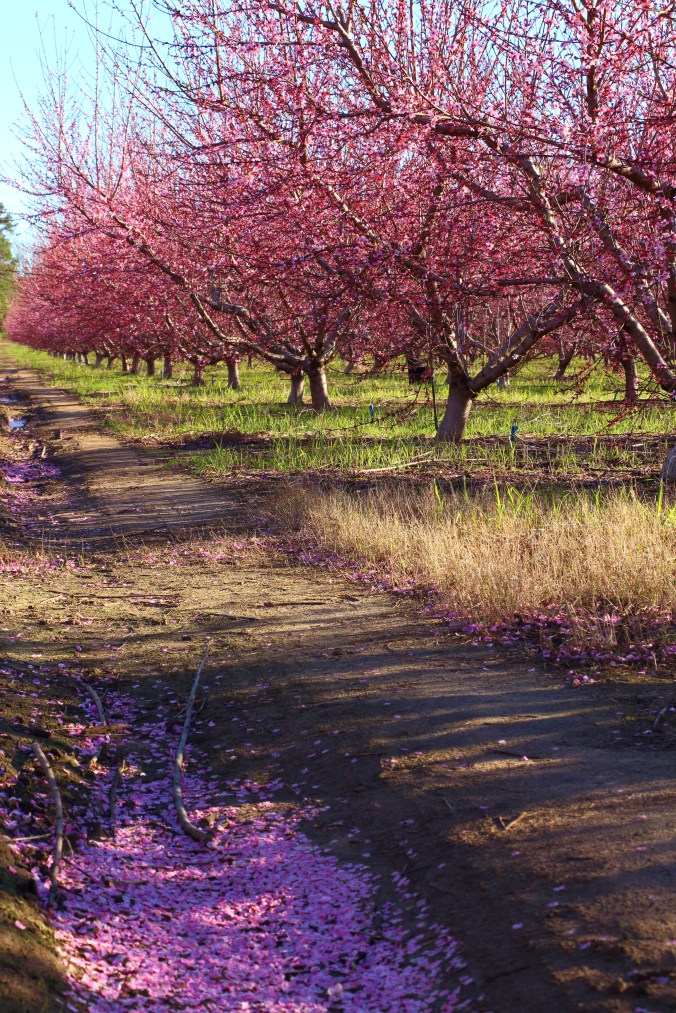
Somewhere down the line that tree died. Died of loneliness I suspect. Bereft of an orchard to comfort it. To show how it looked. It’s no more, but memories of it live on and that tree was on my mind when I trekked into Edgefield County a chilly March 1. I got up at 5:15, threw on the coffee, made ready to leave, and arrived in Peach Country just after sunrise. A heavenly sight waited: peach trees in bloom by the scores. Clouds of pink, pale red, coral, a blushing performance of delicate blooms that mesmerize. Case in point. As I was packing up camera gear just off Highway 19, three women pulled in. They rushed over to a tree, posed, and began snapping photos of themselves.

“The trees are beautiful,” I said.

“We never see anything like this,” said a brunette. “We’re from Florida.”

Well, they have orange groves, but a woman down Florida way tells me orange trees aren’t as spectacular as peach trees though they’re fabulously fragrant. As I drove off, the women were giggling and hopping around snapping photos. High on peach trees they were.

Mom and Dad were high on them too. They always looked forward to a summer ritual: driving to Edgefield County to buy peaches. Where they went exactly I’m unsure but they went. Down Highway 378 across the Savannah they drove taking a right onto Highway 28 in McCormick and a left onto Highway 283 in Plum Branch. Plum tickled they were. Across Stevens Creek they went and on to Highway 25 and into Edgefield proper on through to its peach orchards. Back home they came with split-oak baskets overflowing with flavor. It wasn’t long before peach pies, fresh sliced peaches, pickled peaches, and homemade peach ice cream blessed family gatherings.

Knowing how Mom loved flowers I’m sure the drive to Peach Country provided double joy. Good things to eat and a profusion of blooms with few equals. Along the way I’m sure they talked about growing up with fruit trees. The seed was in their blood. Granddad Walker had crab apples and a date tree. Most unusual taste ever, sweet, dry … unworldly … a tad chemical. On Granddad Poland’s farm a fabulous pear tree, heavy with fruit, stood by a barn. Saw my only butchering of a cow at that barn. Once was enough. That pear tree? I’m going to look for it one day, and if it’s there, I’ll photograph it but there’s no going back to photograph Mom’s lonely peach tree. Like many other good things, it’s gone.

Well, things change don’t they. I’m changing too. I’m adding a ritual to my life. Come winter’s end I’ll keep an eye on the weather and the blooms’ progress. From now on, I’ll photograph Edgefield County’s pink clouds. Something to do … something to look forward to. Something to remember, like Mom’s lonely peach tree but not its beautiful petals; delicate blossoms that surely drifted across our yard like pink snowflakes.

Old Home Places

_MG_0919

Left to fade away …

Where Laughter & Love Once Lived

Now and then some mission takes me off the beaten path into a land known as The Past. I’ll see cotton fields, old country stores, and here and there a lonely sight, an old home place that’s fallen apart board by board, brick by brick.

Last fall while on assignment I stumbled across an abandoned farm hidden by mobs of kudzu. It had a small pen and nearby a dusty, cracked mule collar hung on a stable wall. The home and farm were left behind by the times, quaint times when a farmer might go to town Saturdays to shop for a mule. Now all those farmers and their way of life are gone.

I don’t have to be on an assignment, however, to come upon the homes of yesteryear. I see them a lot out in the country and they always lift and lower my spirits.

I can’t speak for you but there’s something strangely comforting and upsetting about an old home place that yields a mixed bag of emotions. People lived there. People laughed there, and people loved there but now no one remains. And I realize, too, that meanness lived in some old home places too. Maybe that’s why no one saved the place. No one cared if it rots in Hell.

Still, you get a sense of life’s mysteries when you walk the grounds of a vanquished home; you get clues but few answers. Like archeological digs, old home places leave a record of sorts. Like Stonehenge, it’s obvious these homes were forsaken but what caused them to be abandoned? What happened to their inhabitants? What forces swept them away?

You’ve seen them. You’re driving along and you go by what I call recent ruins. I have in mind those places where you can tell a hand tended a yard and you can tell by how the trees grow that, yes, once upon a time a home nestled among these trees. But now little remains.

Back in my college days, a group of us went out into the county one Sunday afternoon to look for old home places. Our goal was finding rare, antique bottles in hard-to-find trash piles where people once tossed out refuse. We found a few bottles, cobalt blue, but what I remember most were the old home places themselves. They were a curious mix of man-altered landscapes being reclaimed by kudzu, pines, vines, weeds, and fields.

We found artifacts. Old heart pine lasts. Leather lasts longer than you think. And copper utensils and tools with their green patina are a delight. Old home places. They’re here and there. Look for them.

Daffodils Rubble

Survivors amid the rubble

You can spot them in the spring by the golden profusions of jonquils that grow in a disorderly way. You can spot them by the little chimneys that stand like monuments to the lives they once warmed. You can spot them by the little Pisa-Tower-like piles of rocks where a foundation once rested. These little heaps of rocks, surviving amid weeds and pines amount to cairns, a word, I learned, that means a mound of rough stones built as a memorial. That is precisely what they have become: memorials to an old home place that suffered a tragic fate: abandonment.

Here, north of a city Sherman rode through, I drive by an abandoned home place a lot. A mile from my house stands a new Publix. People throng there. Some, as they leave, if they’ll ease off their hectic pace, will spot an old home place on a small hill just beyond the parking lot of a dollar store (inflation’s dime store). You can tell by the trees’ spacing that a home once stood among them. More telling is a large prickly pear cactus, planted there with care by a homeowner long gone.

I plan to walk the site someday to see what, exactly remains. Perhaps I’ll find remnants of toys, an abandoned tool rusted and useless. A cracked, weed-infested sidewalk will betray where friends, family, and guests once trod. A lightning-scarred tree might suggest the home burned. Old home places tell us a lot if we but open our eyes.

A decade or so ago I explored my mother’s old home place where she grew up. It burned back in 1964. I found enameled pots, the kind your grandmother cooked in, and dippers that once cupped cold water from a wooden bucket raised from a hand-dug well. The well was right near the smokehouse, gone also. Looking at the brambles that had overtaken it, the smells of youth came back … that satisfying, pungent, salty, smoky fragrance that makes you hungry for bacon.

A few scattered bricks and rocks told me where the foundation had stood. Shards of glass littered the ground where windows once looked out upon a more prosperous time. I know what happened here but I must keep it a secret.

Other forlorn homes baffle me. I know nothing about them except that they have joined the ranks of recent ruins. What happened to the family members over the years? Where did they go? And just what circumstances transpired here? Why did they leave? It’s a hell of a commentary on our society that we let homes fall apart. Why?

There’s a documentary series on the History Channel, “Life After People,” where scientists speculate about what Earth will be like when people no longer exist. It especially examines what might happen to the structures men build. Skyscrapers, dams, and things like the Statue of Liberty. You have seen the show.

You don’t need a TV series to imagine what might happen to your home should no one ever again take interest in it. Stand back and envision the place many decades later … travel into a future when no one cuts the grass, when no one provides sorely needed maintenance.

Just a summer’s worth of uncut grass reveals how quickly nature reclaims what is hers. Let a few years go by without maintenance on trim, shutters, windows, doors, and the roof and soon you have trouble. But no one lets a home go without care forever … do they?

Well, yes, they do. For whatever reason they turn their back on hallways and rooms that once hosted happiness, places where joy and laughter once lived. No doubt there were dogs and cats in those rooms, too, for what is a home without pets. All gone. Nothing left.

Not long ago I heard from a childhood friend who moved about as far as you can and still live in the continental United States. He and I once played horseshoes with shoes made by an old blacksmith who lived across the Augusta Highway from my home. The home of that old blacksmith, Cap Dunn, itself was long ago abandoned but every spring joyous masses of jonquils remind all that, yes, people once lived here.

My boyhood horseshoe competitor drove cross-country to see once again his Lincoln County home. He was eager to show his wife where he grew up. I see him in his RV coming cross the plains describing it to her; I see him headed to that one home we can never replace. What he saw was a shock. The home, dilapidated and nothing like he remembered saddened him. He didn’t bother to stop.

Maybe that’s how old home places come to be. Perhaps it starts when the children move away. The subsequent owners take less and less care of another person’s memory, and then one day the place becomes uninhabitable, and no one wants to buy it. No doubt it falls off the tax roll in the ultimate abandonment.

The years roll on and the roses, jonquils, and shrubs keep growing, hoping that someday someone who once cared for them might return but they never do, and then one day a storm or a bulldozer puts the sad place out of its misery.

I suppose the lure of easy money motivates some to sell old home places, and the desire to bring in new industries does in a few as well. A friend of mine recently shared a fond memory from her childhood, that time of life when everything is new and everything is big.

“When I was a child, my uncle and aunt had a dairy farm in Anderson, South Carolina. The home was a huge white house with a screened porch on two sides where we would run around. The house was right next to the dairy; a barbed wire fence kept the cows out of the yard. I remember waking up from a nap one day and looking out the window and seeing cows at the fence. They looked so sweet that I decided to go outside and visit them. Was I ever surprised when I got outside and saw how large they were!”

That surprise, at least, was a good one. The old farmhouse is no more. Her aunt and uncle died and the house was torn down. A Singer Sewing Machine plant sits where cows once grazed. And my friend? She clings to memories of that house, running around the property and playing softball on the side yard. But now people pull shifts at the plant. Progress I suppose.

Two Sundays ago my Mom asked me to be sure to take care of the place when she “is gone” as she put it. I assured her we will. How about you? Do you have grandparents? Aging parents? A home you’re to inherit? What about your home? What will the deal be?

So, again, I ask you to walk outside and look at your home and yard. Imagine 100 years have lapsed. Is your home still a home? Is it an old home place with relics of the foundation here and there? Or does a shiny new factory devoid of family life occupy the site, a local source of “bread and butter” people brag about. What might your home’s fate be?

Time will tell won’t it?

the sun ball

Photograph by Robert C. Clark

(Visit new menu item, “DREAMSCAPES, to see more posts like this one.)

Solar Meltdown

The sea, a laughing gull, a cloud bank, and the sun. Four elements, artfully composed, create a classic scene brimming with energy. It could also be a blast from the past: the testing of a nuclear bomb over Bikini Atoll. But no, the sun merely rises over the Atlantic. Its churning, boiling photosphere emerges from a sea, which seems to clutch the incandescence, letting go with reluctance.

A sunrise like this is brief. A moment at most. Its witnesses? A shorebird and a photographer. Most people, being captives of the night, prisoners to circadian clocks and a malady called apathy, miss this classic coastal scene.

And what about all that water. At some point it has been morning dew, waterfalls, melting glaciers, bourbon, and rising tides. Who knows what grand events it took part in. Now we see it as a roiling sea, with some of it, no doubt, destined to become trapped in plastic bottles.

We Earthlings take much for granted, not the least of which is water and the air we breathe. And our air? Well, it’s special. Our planetary home orbits within the sun’s solar wind. Simply put, you and I live within the atmosphere of a star.

Aurora Rising


fog at Jones Lake copy

Jones Lake, A Carolina Bay  Photograph by Robert C. Clark 

(Note to blog followers. Visit my updated website and explore new menu item “Dreamscapes” for more narratives and images like these in “Aurora Rising.”)

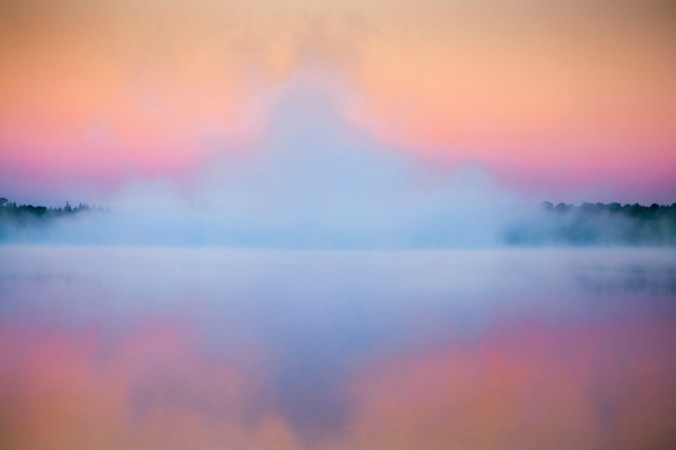
October dawn. A place that seems like a dream. Jones Lake State Park. Near Elizabethtown, North Carolina. This Carolina bay, gouged from the earth by a meteorite, thought some, lies upon the land, a forgotten pendant. Set amid a rim of green bay forest it is tranquil and shimmering, a jewel of a natural area. No stream, creek, or spring feeds this lake. It relies on rainfall … as do you.

The night before, the chilled air, heavy with dew, coated the land with silver lacquer. A million stars salted the night and come dawn a royal spectacle arrived. Aurora, goddess of Dawn, rose to spread her gown of gray over coral waters.

Perhaps Welch, a songwriter, passed through here. “I remember a talk about North Carolina and a strange, strange pond. You see the sides were like glass in the thick of a forest without a road. And if any man’s hand ever made that land, then I think it would’ve showed. Seems like a dream.”

Yes a dream … Perhaps you’ve never been to a Carolina bay. Perhaps you should. Put it on your list. Go early on a cold autumn dawn and see Aurora rising over one of Earth’s true mysteries.

Our Vanishing Tenant Homes

Tenant Home Cotton Cropped

Simple lines, elegant beauty … along SC’s Highway 521

The South, and Georgialina is no exception, is surely losing a picturesque part of its past. I’m talking about tenant homes: those stately little shacks that provide one last glimpse of a vanquished culture.

As a boy, I used to see them everywhere. Elegant little houses resting on rock piles standing like sentinels over fields. Now they are rare, although a drive into farm country still turns one up now and then.

Referred to as saltbox houses, catslides, and pole cabins, they long stood with grace and character in pastures and fields. In their heyday, a sea of white cotton surrounded tenant homes every summer, but when the mules, plows, and hoes gave way to tractors, the homes were abandoned. Today, nothing but wasps, mice, and birds make their homes in them. Weather, vandalism, and sheer neglect have long been destroying them and today few remain. All that’s left of many are chimneys, a pile of bricks, and field stones.

For generations, the plain folk of the South lived in tenant homes. Many sprang up during Reconstruction, an era of suffering and upheaval when being a tenant farmer meant a step up the social ladder. Sharecroppers exchanged a crop for a house and a share of the yield. Still, a tenant farmer often had nothing to show for his efforts at year’s end.

The tenant lifestyle long provided fertile ground for writers. Many writers portrayed life in the little homes as an insufferable existence. Rita Turner Wall, author of The Vanishing Tenant Homes of Rural Georgia, wrote that “life in the old houses was what the occupants made of it: a vegetable garden and a flock of chickens or hard fare, a yard full of flower beds or blank emptiness, a tablecloth or bare boards, a good life or a bad life.”

Tenant homes had no plumbing, no built-in sinks, no cabinets, no closets. Generally, only functional furniture such as pie safes, beds, and chairs graced these old homes. Jars and simple containers on crude shelves held the staples: cornmeal, flour, and grits. Kerosene lamps broke the darkness. Buckets hauled water up from wells. Life was hard except the tenants didn’t know it. They gathered in the evening to swap stories and sing. There was no TV, no radio, and maybe that was a blessing in a way. “Survivor” was not a TV show but a way of life and everyone pulled together.

And then Southern farm tenancy ended abruptly after World War II. Government programs, farm mechanization, and tenants’ own inefficiency drove them from the land and the seductive call of prosperity lured them to the city. After decades of painting them, patching them, and sealing cracks in the walls with newspapers, people have long left tenant homes alone and that is sealing their fate.

I see more beauty in a weathered tenant home than some sparkling vinyl-sided house. Wall wrote that “there is in the pitch of the roof, the shape of chimney, the whole mass, an orderly disposition pleasing to the eye.” She’s right about that. From their simplicity, a majestic beauty blesses the land they stand on. Unimposing and providing a glimpse into the past, they stand as works of art, even as they list and their windows lose their shape. No wonder so many artists and photographers find these survivors fascinating.

The Last Great Snake Man


Canebrake Rattler

Canebrake ratter, known also as a timber rattler and banded rattlesnake


We Southerners and snakes make an interesting mix. We’re scared of them because we just know that someday our time to mix it up with a snake will come. They’re just such sneaky little creatures. Fangs! Headed toward your leg.

I’ve always wondered what I’d do when a big snake bites me. It seems guaranteed, but so far it hasn’t happened, and in a strange way I’m disappointed. What a test of my manhood that would be.

“Rattler got me yesterday …”

“No way. You’re still alive.”

“Yep, dry bite. Got lucky.”

Snakes. I know people who hate them, love them, avoid them, and collect them. Most people don’t like them, largely because of myths and a fear of the unknown. Ever since Adam and Eve and that infamous Apple, snakes get a bum rap. Many people believe the only good snake is a dead snake.

Whatever camp you fall into, be forewarned. Warmer weather breaks their dormancy and out from their hiding places they come. As sure as daffodils bloom, snakes slither through your yard and sooner or later, you’ll cross paths with Mr. Serpent, aka sneaky snake.

I’ve had a few snake encounters … back in the days when I was making natural history films I’d go to Woods Bay State Park, a swampy place between Sumter and Florence, South Carolina. I’d go alone and set up my camera and film whatever moved … ospreys, alligators, wood ducks, and other waterfowl of all kinds.

One day, alone as always, because two or more people invariably talk and scare off wild animals, I was panning across water lilies when a noise to my left distracted me. About 12 feet away a cottonmouth as thick as my arm slithered across the path. Before I could get my camera turned around it was gone, and soon so was I.

Another film experience brought me a gastronomic snake encounter. I was jouncing along a dusty road in Cape Romain Wildlife Refuge off the coast near Charleston at a place called Bull Island. The wildlife department had airlifted a jeep there and a biologist and I were riding along to film an alligator den when he slammed on the brakes. He jumped out with a stick with hook. Up ahead a thick rattlesnake slithered through the dust.

“What are you doing?”

“Gonna eat it,” he said, hooking the rattler, which began coiling, rattling, and fighting as best it could before he tightened a noose around its head. Into a cage in the back of the jeep it went to be killed, skinned, and grilled.

On another occasion I went to a big weekend event for sportsman at the state fairgrounds over here. One of the big exhibits was an indoor containment area filled with 300 rattlers. The moment you stepped into the building, a sickly sweet fragrance like burnt sugar hit you and then you heard this sound: 300 rattlers expressing their displeasure at being held captive. A man with snake boots walked among them as if he were strolling through a patch of daffodils.

A minor but jolting encounter … Last summer I was watering a new bed of St. Augustine with a bright green hose. Suddenly the hose began to coil around my wrist. It took my eyes a second to realize what was happening. A bright green garter snake had crawled up the hose and was wrapping itself around my right wrist … Slinging the hose away, I did something resembling the Mexican hat dance.

Yes, snake season is upon us and soon we’ll see them everywhere. A snake has never bitten me, but I read about a fellow who may have set a record for snakebites: the Last Great Snake Man, Tim McLaurin.

Tim grew up on a family farm near Fayetteville, North Carolina. An ex-Marine, he once ran a traveling snake show. He also became an assistant professor at North Carolina State University based on his love of books. The author of a memoir, Keeper of the Moon, he was a bona fide man of letters and alcoholic though he preferred the term “drunk.”

He died July 11, 2002, of esophageal cancer, a snake of another kind. Tim was 48. He asked a friend to build his coffin, a fellow who shoed horses. His friend made a pine box with steel rims inlaid vertically and horizontally. They said it looked like a whiskey barrel. Yes, Tim McLaurin is gone, this daring snake handler, (not the South Georgia type). Hear him speak now, though he’s gone.

“My sanity was questioned. But all I knew was that with a rattler or a copperhead in my hand, a path between people opened before me like the Red Sea rolling back.”

The great snake man was eight years old when he caught his first snake. He was walking home from the school bus stop when he saw a slender snake the color of wheat. “I stopped and stared. A voice as old as religion spoke to me. ‘Run, boy. Get your daddy. Get the hoe. Chop that thing into as may pieces as you can. Snakes can hypnotize you. They can sting you with their tongues. They are the incarnate of evil.’ ”

Tim did just the opposite. He grabbed the snake and put it in a mason jar. Two fine things happened. The next time the bookmobile came his way he checked out a book on snakes. That act began a lifelong love for reading. As he read, another great thing happened. He learned that not everything you are taught is true. He learned that snakes were incredible.

“Whenever I held a snake in my hand, I was defeating ignorance,” said Tim, wiser now, that he had learned some hard lessons. Tim got bitten so many times he developed blood cancer as a result of all the anti-venoms he had to take. One day a black snake bit him and died. Tim, you see, had had so much chemotherapy in his blood the snake died. They say Tim McLaurin went on record as the one time a snake bit a man and died. Tim, no doubt, felt sadness because he loved snakes. He was, after all, the last great snake man.

I hope we all learn from the last great snake man. The next time you see a snake, don’t get the hoe and chop it up. Just let it be.

We all have to survive in this world and live off it best we can. Why make it hard on one another just because somebody taught you the only good snake is a dead snake. I say live and let live.